

Nuclear
Nuclear: zero-carbon mainstay of northern europe
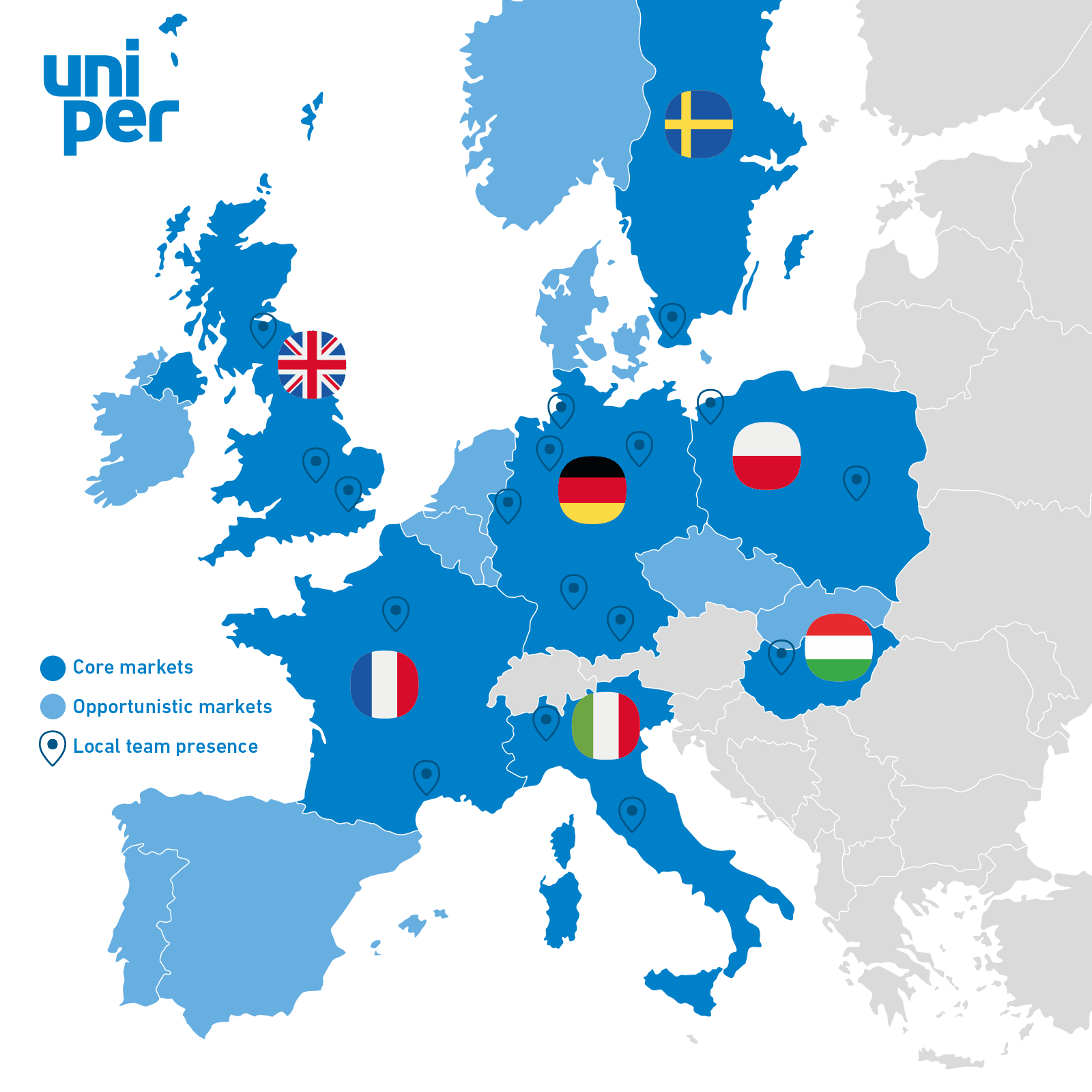
In the beginning of 2023, Germany’s last three nuclear power plants split their last atoms. In northern europe, by contrast, nuclear energy enjoys broad public support. Uniper has 1.4 GW of attributable nuclear capacity in Sweden, which relies on nuclear energy for about 30% of its electricity.
Image

Nuclear at Uniper
The zero-carbon reliability of this capacity will become even more important going forward as more vehicles run on electricity and economies becomes more digital.
Sweden has three active nuclear power plants: OKG, Ringhals and Forsmark. Uniper has a unique position, since we are joint owners in all of them. We are the majority owner of OKG in Oskarshamn and a minority owner of Ringhals and Forsmark. We also own Barsebäcksverket, the first commercial nuclear power plant in Sweden, which is now decommissioned and is being dismantled in line with the Swedish system, which means that the owners of the nuclear power plants take full responsibility throughout their life cycle.
Image

Responsible operation, responsible dismantling
The top priorities of our nuclear business are safety and responsibility - across our plants’ lifetimes. We’re currently dismantling four decommissioned nuclear power plants in Sweden. Only a comparatively small percentage of a nuclear power plant’s components is so radioactive that it requires special handling and storage. We strive to recycle the rest. At Barsebäck 1 just north of Malmö, we‘re recycling about 95%.