



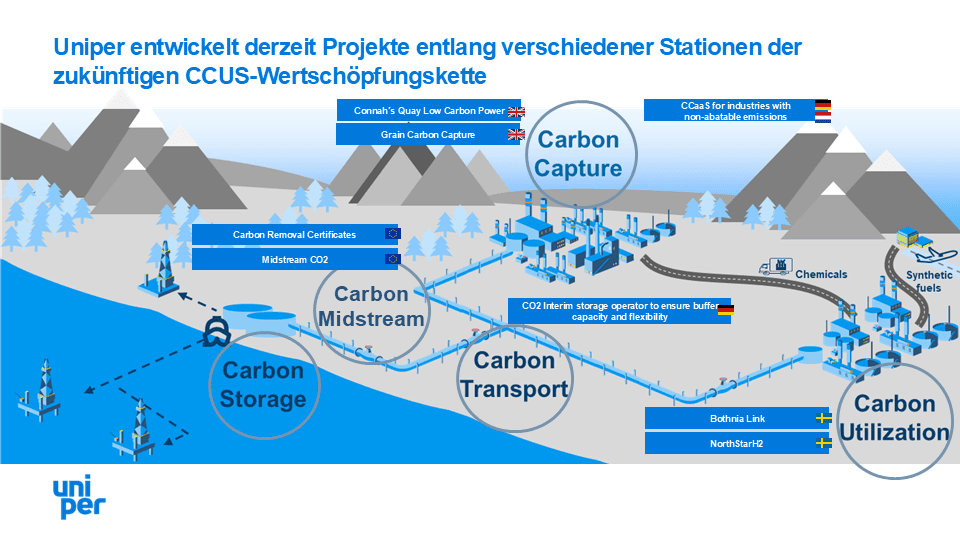

Carbon capture’s potential varies by country. The main factors are industry mix, amount and proximity of storage capacity, regulatory environment (national carbon strategy, laws, subsidies), and public support (see graphic below). The Nordic countries currently have the most favorable circumstances across all factors. Indeed, Norway, albeit outside the EU, ticks all the boxes, from strategy and legal framework to public support. Not surprisingly, it also has Europe’s most mature large-scale CCS project: Northern Lights.
Northern Lights is a cross-border, open-source CCS network. Companies across Europe can send their CO2 to be piped into safe, permanent storage 2,600 meters under the seabed off Norway’s west coast. The onshore terminal, special transport ships, and pipeline are already in place, and the first deliveries are planned to be made in 2024. In its first phase Northern Lights can likewise accept up to 1.5 million metric tons of carbon annually. Norway’s total potential carbon storage capacity is estimated to be 9.4 billion metric tons—almost 300 times its current emissions.
A similar project called Greensand is under development in Denmark. Here, permanent storage will be in a sandstone reservoir 1,800 meters below the seabed. Greensand intends to have an initial storage capacity of 1.5 million metric tons per year, which is expected to increase to 8 million by 2030. Greensand received its first carbon shipment in March 2023. In addition, Denmark is currently the only European country working on the development of onshore storage facilities.

