Plan for one – do it for four
Oskarshamn kärnkraftverk, OKG, and Barsebäck Kraft AB, will handle the radiological demolition as part of a collaborative project that is split into various work packages. A work package could, for example, involve the segmentation and removal of the reactor vessels or the removal of turbine and generator components. The main work will be conducted sequentially, i.e., such and such must first be done at one site, then at the others. This will enhance the efficiency and safety of the demolition process. The organizations of both companies will adapt to this work method and many employees will assume new roles at the sites.
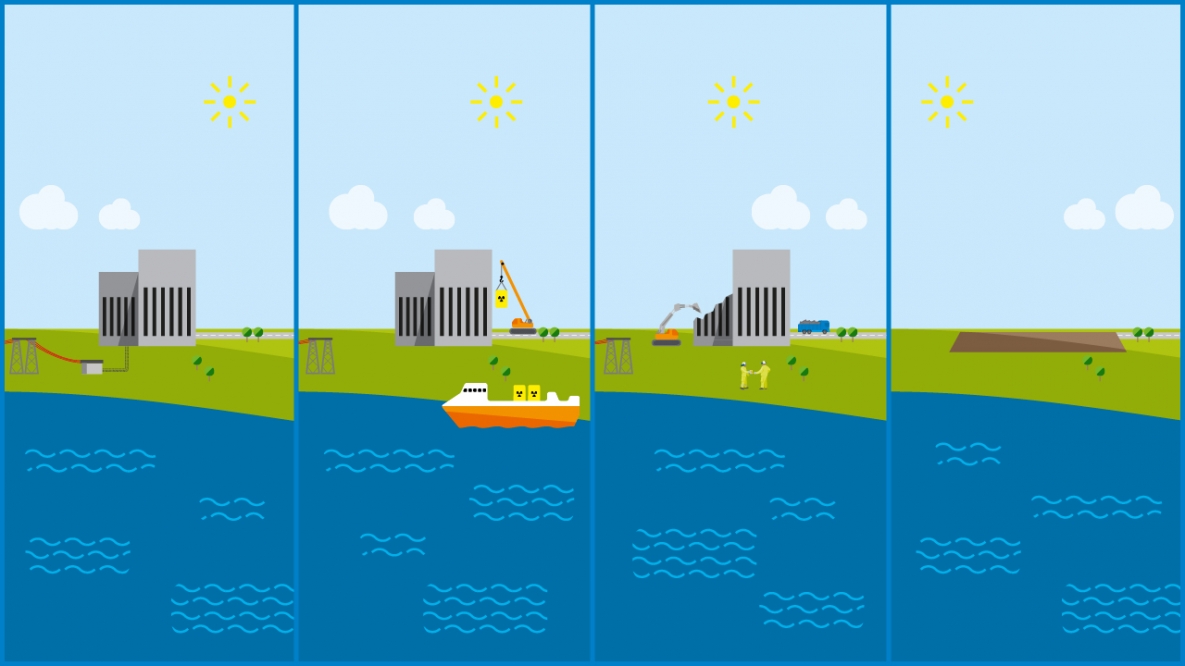
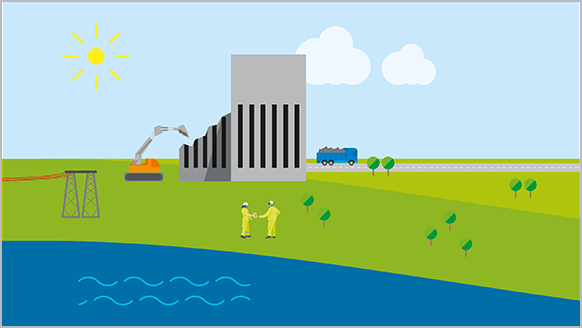
Before dismantling can begin certain preparations must be made, such as transporting all spent nuclear fuel to the shared Swedish interim storage facility in Oskarshamn. At Barsebäcksverket, the last items of nuclear fuel were removed as early as 2006. Authorizations, as well as environmental permits and new safety analyses reports must be in place. All radioactive material must first be removed before the nuclear power plant can be demolished. Plants are dismantled from the inside out, in order to remove the most radioactive materials first. These may consist of the internal components of reactor vessels and the reactor vessel itself. After these major undertakings are completed, less radioactive components, such as the turbines and generators, are next in line. A systematic review of the entire facility then follows. Concrete, metal and other materials that are also radioactive are removed in the next step. About 6% of the entire facility is radioactive and must be removed first.
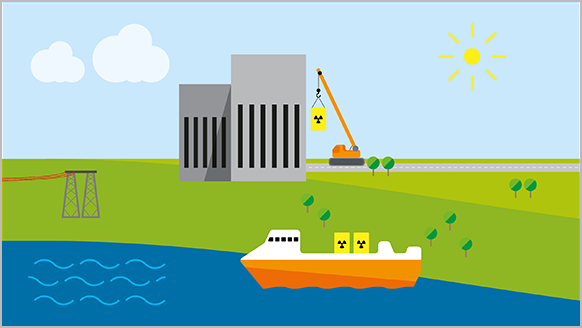
Once all the radioactive materials have been removed, the plant is classified radioactivity free. The conventional demolition of buildings then begins – the major and visible part of the work, which is several years ahead. The conventional demolition phase will be implemented in the early 2030s. Once the buildings have been demolished, the concrete will be sorted for backfill and the metal for recycling. The small amounts of asbestos and PCB that exist that will be processed pursuant to prevailing regulations.
We work proactively to transport the demolition materials in the most efficient manner possible.
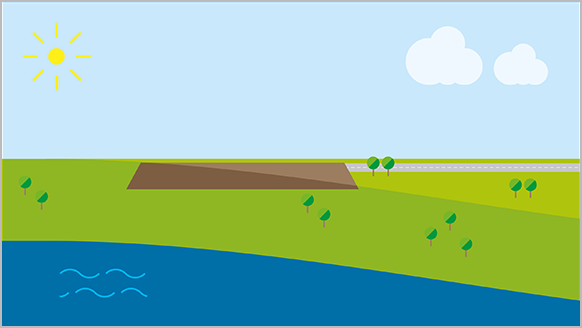
When the conventional demolition is completed the land will be restored to an industrial plot with a radiation level identical to that of the surroundings. Skåne has very low levels of natural background radiation. Uniper is the owner of the land and will subsequently make a decision about what the land should be used for in the long term. For example, the electricity grid infrastructure adjacent to the plant makes the site suitable for electricity generation.
Uniper intends to demolish the buildings and prepare the land for industrial purposes. There are no radiological obstacles to taking any additional steps to change the land’s zoning status in the long term to enable its utilization for other purposes, such as a public recreation area or residential district.